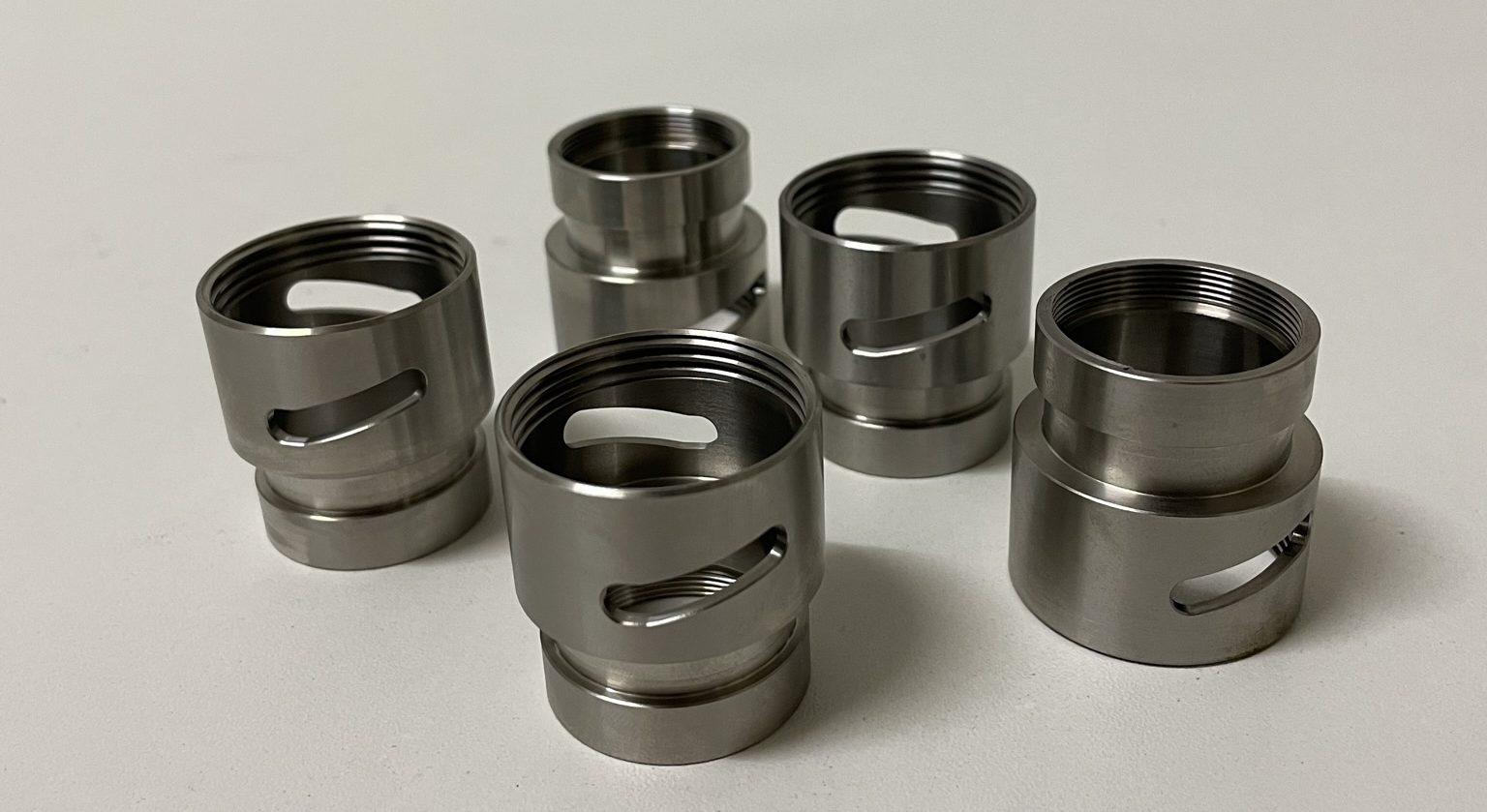
Precision engineering requires a thorough understanding of materials and the machining techniques suited to each material. Engineers must master the specific properties of each material in order to select the most appropriate techniques. Materials such as aluminum, titanium, and stainless steel possess unique characteristics that make them indispensable in various industries. Consequently, advanced technical skills and the use of high-performance materials are essential for achieving excellence in this field.
Metals
Aluminum
Aluminum is a lightweight, malleable, and corrosion-resistant material. Furthermore, it is widely used in industries such as aerospace, automotive, and electronics, where its light weight and electrical conductivity are essential. However, technicians must handle aluminum with care during machining to prevent deformation caused by the heat generated during the process.
Stainless Steel
Stainless steel is known for its corrosion resistance and durability. It is commonly used in the medical, food processing, and automotive industries. However, professionals face challenges when machining stainless steel due to its hardness and ductility. They must therefore use specialized cutting tools to overcome these challenges.
Titanium
Titanium is a lightweight yet extremely strong material. As a result, it is primarily used in demanding sectors such as aerospace and the medical industry. Machining this material remains challenging due to its tendency to heat up quickly and oxidize. Consequently, it requires highly specialized machining techniques.
Copper and brass
Copper and brass are known for their high electrical conductivity. They are used in the electronics industry and in connectors. However, professionals must adapt their machining processes for these materials, ensuring that specific cutting speeds are used to prevent burr formation.
Special Alloys
Special alloys, such as Inconel, Monel, and Hastelloy, are designed to withstand extreme conditions. They are used in environments where high temperatures and corrosion are common. Technicians often face challenges when machining these materials due to their hardness and strength. However, these alloys remain indispensable in high-performance applications.
Engineering Plastics
PEEK (Polyetheretherketone)
PEEK is a high-performance thermoplastic that offers exceptional resistance to heat, chemicals, and wear. It is primarily used in medical implants and aerospace components. That said, engineers must employ high-precision manufacturing techniques to ensure its performance in critical applications.
POM (Polyoxymethylene)
POM offers high wear resistance and low friction. Because it absorbs very little moisture, it retains its mechanical properties even in humid environments. As a result, it is highly suitable for manufacturing parts exposed to harsh conditions, such as those found in the automotive and electronics industries
Nylon
Nylon is known for its abrasion resistance and moisture-wicking properties. It is often used in the manufacture of gears, bearings, and wear parts. In addition, it is the material of choice in environments where parts are subjected to heavy stress.
Teflon
Teflon is a polymer with a low coefficient of friction and excellent chemical resistance. Engineers frequently use it in the manufacture of seals, gaskets, and non-stick components. As a result, it is ideal for applications requiring high resistance to corrosion and extreme temperatures.
Polycarbonate
Manufacturers use polycarbonate, a transparent, impact-resistant material. They use it in protective glazing, optical lenses, and the manufacture of safety components. This enables them to offer safe and durable products, even in high-risk environments.
Technical Ceramics
Aluminum Oxide
Alumina offers high hardness and is resistant to corrosion and high temperatures. Manufacturers use it in cutting tools, bearings, and electronic components. Furthermore, its durability makes it a preferred choice in high-precision industrial environments.
Silicon Carbide
Silicon carbide is known for its heat and abrasion resistance. Engineers commonly use it in high-performance applications, such as ceramic brakes. As a result, it extends the service life of components while reducing wear.
Silicon Nitride
Silicon nitride is valued for its high thermal conductivity and resistance to thermal shock. Manufacturers primarily use it to produce heat sinks and electronic components. This enables effective heat management in advanced electronic systems.